Essays
All essays
-
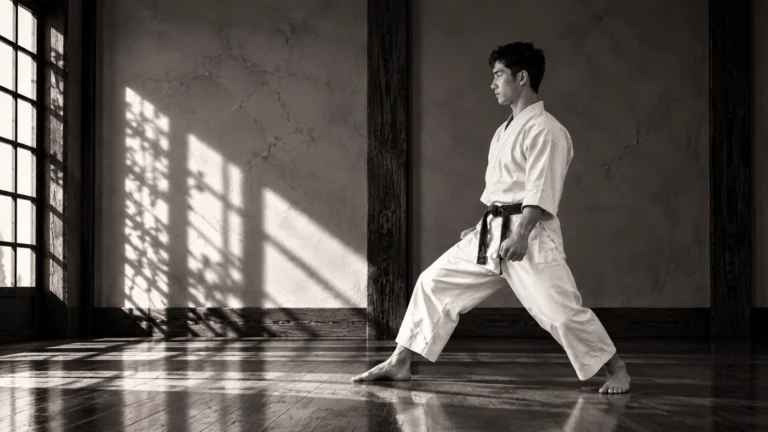
Karate from Inside – Stances: The Foundation in Motion
Read essay: Karate from Inside – Stances: The Foundation in MotionA stance can be defined as a temporary organisation of the feet, legs, pelvis and centre that allows the body to interact with the ground in…
-
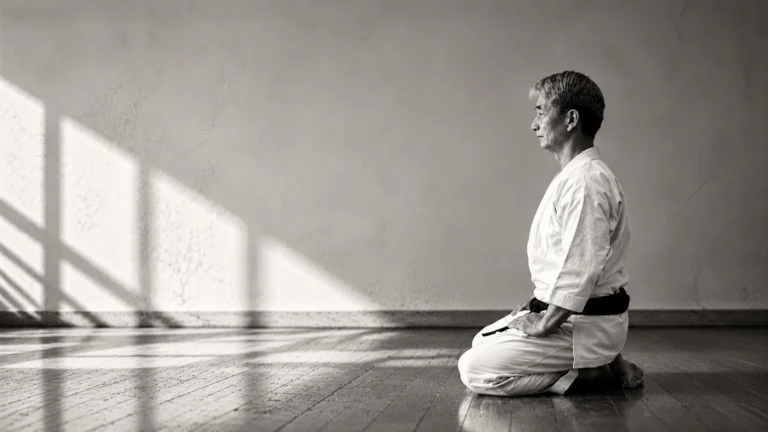
Karate from Inside – Will and Ageing
Read essay: Karate from Inside – Will and Ageing“In karate we have no peak, no limit,” Nishiyama Sensei once said. But if there is no peak to reach, no final level at which mastery…
-
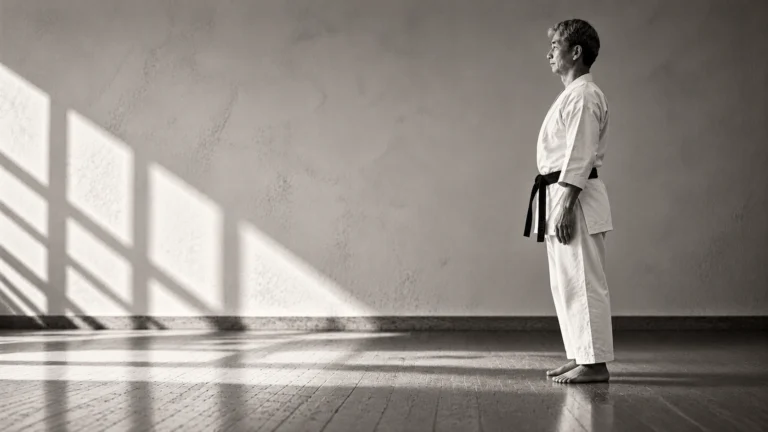
Karate from Inside – Posture: The Blueprint of Potential
Read essay: Karate from Inside – Posture: The Blueprint of PotentialIn traditional karate, we spend years correcting nothing more than how we stand. This piece explains why: posture is where the body first meets pressure, and…
-
Karate from Inside – Why Philosophy Matters
Read essay: Karate from Inside – Why Philosophy MattersThere comes a moment in karate training when the physical corrections stop and something harder to name begins. Your Sensei is no longer watching (just) your…
-
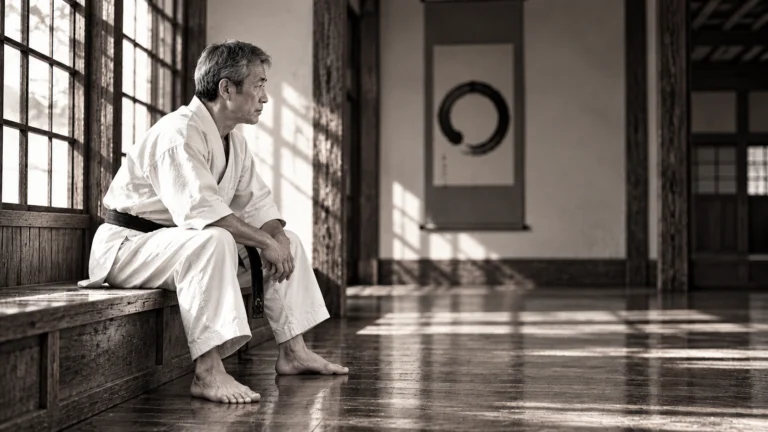
Growing older in Karate
Read essay: Growing older in KarateAgeing is not a choice, but how you age is. When the body starts changing the rules, why do some older karateka move better than ever…
-
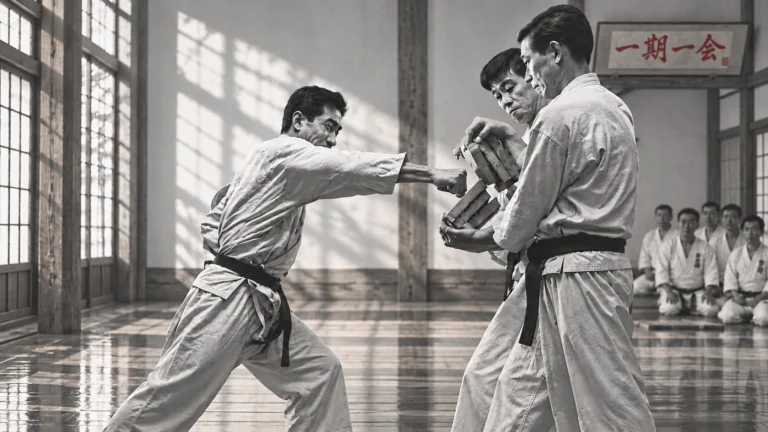
One Body
Read essay: One BodyHow do the mechanical, regulatory, and perceptual layers of traditional karate training integrate into a single coherent system? The third article in the science series.