Archive
Long read
-
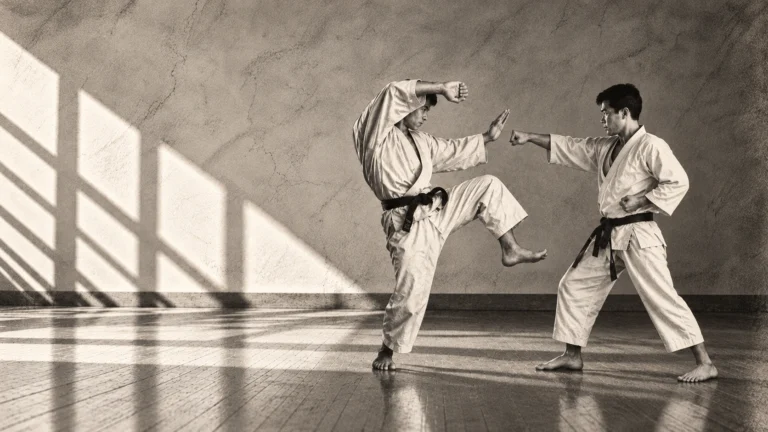
The Inner Web: Nervous System Regulation in Traditional Karate
Read essay: The Inner Web: Nervous System Regulation in Traditional KarateThe nervous system dimension of traditional karate – how consistent practice develops regulatory capacity alongside structural integration.
-
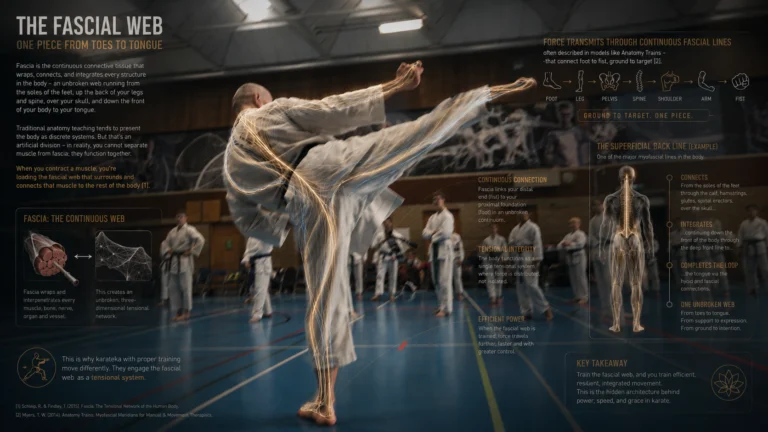
The Continuous Web: Understanding Fascial Training in Traditional Karate
Read essay: The Continuous Web: Understanding Fascial Training in Traditional KarateHow traditional karate develops fascial qualities that modern training science is only beginning to understand and articulate.
-
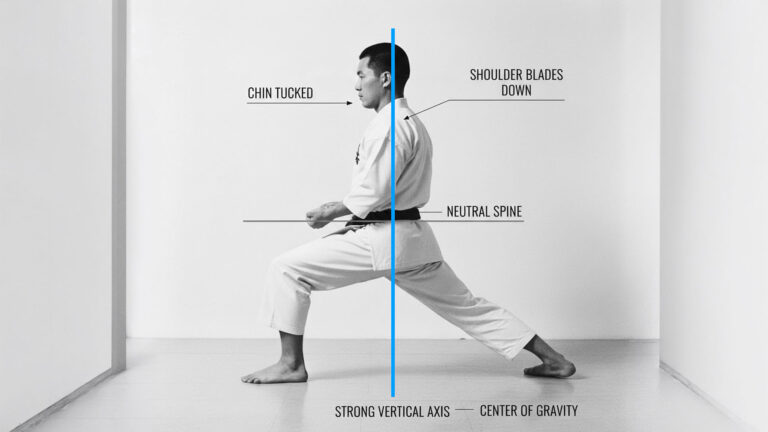
Fix Your Shoulders, Improve Your Technique.
Read essay: Fix Your Shoulders, Improve Your Technique.Weak scapular stabilisers can pull the whole body out of alignment. How the mid-back and the muscles along the ribs shape posture – and why fixing…
-

Maai — The Space Between: The Rhythm of Distance in Traditional Karate
Read essay: Maai — The Space Between: The Rhythm of Distance in Traditional KarateMa-ai is neither distance nor timing, but the living interval between two people – shaped by both, belonging to neither. What it means in traditional karate,…
-
Fast is not slow…but faster: why training speed matters in Traditional Karate – Part III.
Read essay: Fast is not slow…but faster: why training speed matters in Traditional Karate – Part III.“The philosophy that Sensei taught was in the doing, not in words.” Part 3 of three: how slow and fast practice lead from form to formlessness.
-
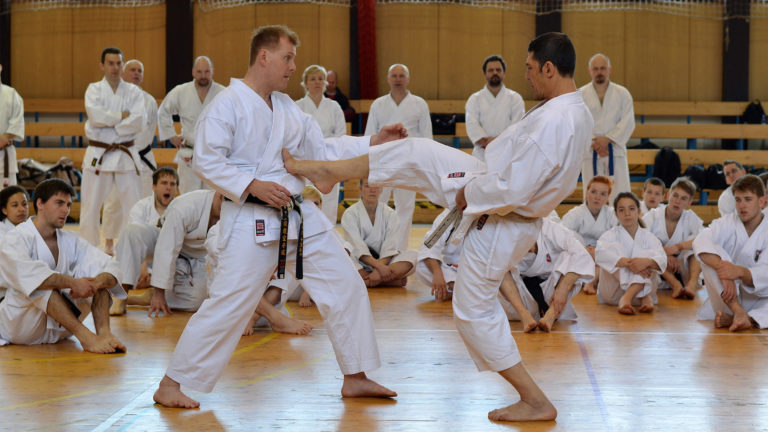
Fast is not slow…but faster: why training speed matters in Traditional Karate – Part II.
Read essay: Fast is not slow…but faster: why training speed matters in Traditional Karate – Part II.Build the structure slowly, then bring it to life at speed. Part 2 of three: practical ways to combine slow and fast training, guided by Sensei…